
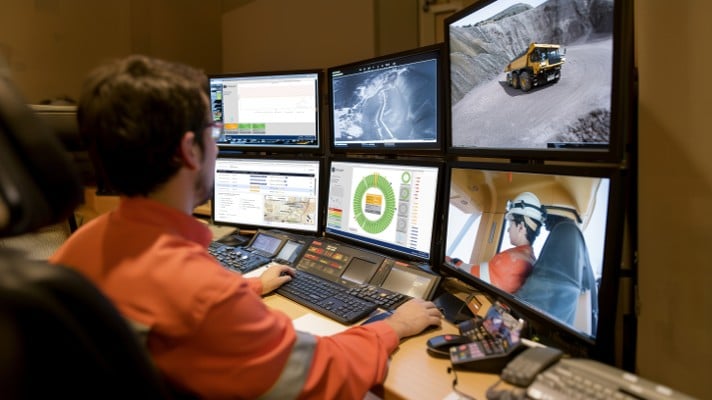
Mining and haulage operations carry a higher drowsiness exposure than almost any other industry. Operations run 24 hours a day, rosters push work into the body’s least alert hours, sites are remote enough that the commute is itself a hazard, and the equipment involved means a brief lapse can be fatal.
Most operations already know this. What they usually lack is a way to tell which operator is impaired right now, rather than which operator ought to be.
The short answer
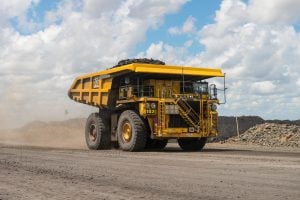 Effective fatigue management in mining combines three things: countermeasures that temporarily restore alertness, roster design that limits accumulated sleep loss, and objective measurement that identifies elevated risk in real-time. Countermeasures and rosters are necessary but not sufficient, both work on averages. Only measurement tells a supervisor which specific operator is approaching a dangerous level, while there is still time to intervene.
Why mining and haulage carry the highest exposure
Four factors compound in this environment.
- Continuous operation. A 24-hour site necessarily places operators in the circadian trough between roughly 2:00 and 4:00 a.m., when the drive to sleep is strongest regardless of how much rest a person has had.
- Monotonous task profile. Repetitive haulage circuits provide minimal arousal. Sustained attention during undemanding tasks is the first cognitive function to fail under sleep loss.
- Remote location. Long commutes, camp accommodation, and fly-in fly-out rosters all disrupt sleep quantity and timing.
- The drive home. Fatigue is involved in approximately 30% of fatal crashes on rural roads in Australia, against 16% of fatal crashes overall.1 Remote operations put their workforce on precisely those roads, at precisely the wrong hour, at the point where supervision ends.
Which fatigue countermeasures actually work?
Countermeasures are the foundation of any fatigue management plan, and their limits need to be stated as clearly as their benefits. They temporarily reduce the risk of an incident. They cannot eliminate it. The only cure for sleep loss is sleep.
| Countermeasure | Effective dose | Duration of benefit | Key limitation |
|---|---|---|---|
| Short tactical nap | Approximately 30 minutes | Up to a few hours | Sleep inertia on waking: grogginess and impaired performance that can persist for up to an hour |
| Caffeine | Approximately 200 mg (2–3 cups of coffee) | 1–2 hours | Takes up to 30 minutes to act; tolerance varies; disrupts subsequent recovery sleep if taken within about 3 hours of it |
| Caffeine immediately before a short nap | ~200 mg, then a nap of about 30 minutes | Up to a few hours | The most effective combination available, and still a temporary measure |
Why the nap and caffeine combination works
Caffeine takes approximately 30 minutes to reach full effect. Taking it immediately before a short nap uses that delay productively: The operator sleeps while the caffeine is absorbing, then wakes with the benefit of both, and the caffeine offsets the sleep inertia that would otherwise follow.
What napping does not do
- It does not assist adjustment to night shift.
- It does not replace inadequate or poor quality sleep.
- It provides no benefit until sleep inertia has dissipated, which is why recovery time must be built into the operational plan rather than assumed away.
Why countermeasures and rosters are not enough
 Both controls work on populations. A roster model predicts that an operator on their fourth consecutive night shift is likely to be impaired. A countermeasures policy ensures that operator has somewhere to nap.
Neither tells a supervisor that this operator, in truck 14, is at a dangerous level right now, and that is the only information an intervention can act on. Two operators on identical rosters can carry entirely different levels of impairment depending on how well each of them actually slept, whether either has an undiagnosed sleep disorder, and what their commute looked like.
There is also the self-assessment problem. The intuitive control (asking operators to report when they are too tired to continue) fails precisely when it matters, because the cognitive capacity needed to judge one’s own state degrades along with everything else. An operator at a genuinely dangerous level of drowsiness will often report feeling capable, and will not be lying.
Why camera-based systems fall short in this environment
Most operations evaluating drowsiness detection will look at camera-based systems first. Two characteristics make them a poor fit for remote heavy industry.
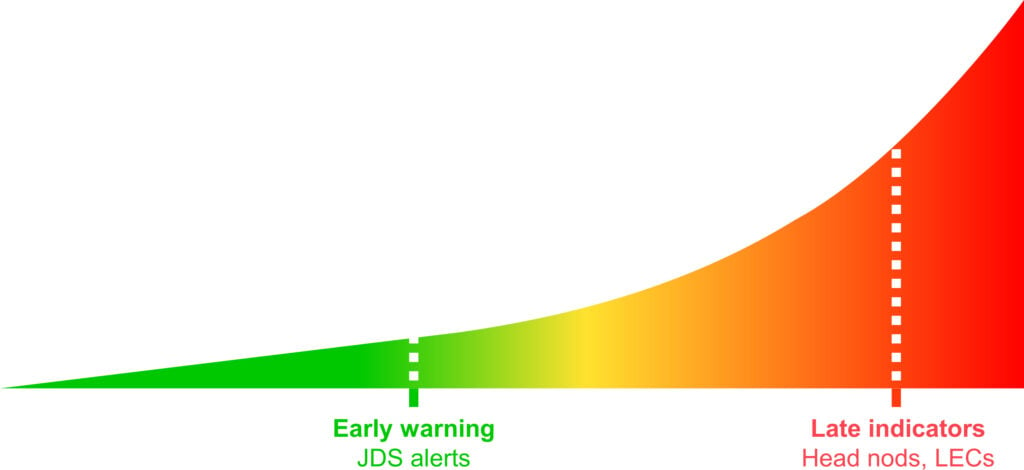
They alert too late. Camera systems generally trigger on head nods, long eyelid closures (LECs), or PERCLOS: the percentage of time the eyes are at least 80% closed. A 2023 review in SLEEP Advances notes that PERCLOS-based alarms typically require the eyes to be closed for around 48 seconds within a single minute before triggering, which makes the approach too slow to allow preventive action, and that PERCLOS is unreliable under moderate drowsiness.4 The alert is a record of exposure, not a warning that prevents it.
Optalert’s field experience is consistent with that finding: By the point a long eyelid closure alarm fires, elevated risk has usually been present for at least 30 minutes, and the operator has been fortunate not to have already had an incident. This is also supported by laboratory data on participants subjected to extended wakefulness protocols.
The data arrives too late. On remote sites with constrained communications, alerts are frequently delayed further. In deployments Optalert has replaced, alerts were reaching the control room hours (in some cases days) after the event. That removes any possibility of real-time intervention, and it erodes operator confidence in the system, which is usually the point at which a monitoring programme quietly stops being used.
What the deployment evidence shows
A large mining operation in South America was recording close to 60 haul truck incidents per year across a continuous 24-hour shift structure, many involving heavy mobile equipment with high potential for serious injury or fatality. The site had already evaluated camera-based monitoring and encountered both problems described above.
Optalert’s system was deployed across the full off-road haulage fleet of more than 200 trucks, combined with control-room oversight and defined intervention procedures. Over a multi-year programme:
| Measure | Result |
|---|---|
| Fatigue risk exposure (alert frequency per operating hour) | 98% reduction |
| Total reported incidents | 76% reduction |
| Production (tonnes per hour) | 5% increase |
The mechanism behind the result matters more than the headline. Drowsiness was measured objectively on the Johns Drowsiness Scale (JDS™), a validated 0–10 biomarker derived from eyelid movements. Over the programme, an increasing proportion of scores stayed below 4.5 (the threshold above which risk of performance failure rises substantially) and average scores fell year on year.
That second trend is the important one. A falling average across years is not the system catching more events. It is the workforce and the operation changing behaviour because the risk finally had a number attached to it.
The production increase is worth noting for anyone building a business case. Fatigue management is usually argued as a cost of safety. Here it was accompanied by higher output, because unplanned incidents and their consequent downtime fell.
What the 1 August 2026 accreditation change means for Australian operators
 Amendments to the Heavy Vehicle National Law commenced on 1 August 2026. Alternative Compliance Accreditation – Fatigue (ACA-Fatigue) now replaces Basic Fatigue Management and Advanced Fatigue Management for new applicants, with the regulator setting Alternative Compliance Hours suited to an individual operation.5 Existing BFM and AFM accreditations remain valid until they expire, are cancelled, or the operator chooses to transition.
The practical consequence for a road transport operation is that the basis of accreditation shifts further toward demonstrating how fatigue risk is actually managed, rather than showing compliance with a fixed hours table.
That is a reasonable moment to ask what evidence an operation can currently produce. Roster records demonstrate that rules were followed. Objective drowsiness data demonstrates what the rules achieved, which is a different and considerably stronger position to be in when the question is how you manage the risk rather than whether you complied.
Building a programme, not buying a device
The result above did not come from installing hardware. It came from three things operating together.
- Real-time measurement. Objective drowsiness data available to supervisors while a shift is running, not in a report afterwards.
- Defined intervention procedures. A JDS score is only useful if there is an agreed action attached to it: who is notified, what is offered, and at what threshold.
- Control-room oversight. Someone whose responsibility includes watching the data and acting on it.
Operations that implement the first without the second and third generally see the technology fall into disuse. The data becomes something reviewed after an incident rather than something acted on before one.
Does this apply to rail and long-haul transport?
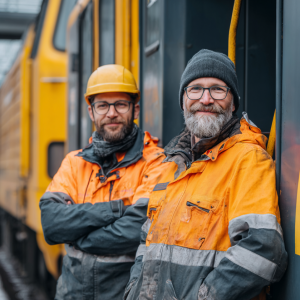 Yes. The underlying exposure is identical: continuous operations, circadian troughs, monotonous task profiles, and equipment where a lapse of under a second has serious consequences. Rail adds a specific complication in that a train driver cannot pull over, which makes early detection more valuable rather than less.
The controls transfer directly. What changes is the intervention available (a haul truck operator can be stood down and rotated, a train crew may need a different response), which is why intervention procedures should be designed for the operation rather than adopted generically.
Frequently asked questions
What is fatigue management in mining?
The operational practice of monitoring and controlling drowsiness-related risk across a workforce. It typically combines roster design, education, countermeasures such as tactical napping, and (where implemented well) objective real-time measurement of operator impairment.
How long should an operator nap on shift?
A brief nap of approximately 30 minutes increases alertness during a night shift. Naps longer than 30 minutes induce deeper sleep and worsen sleep inertia: the grogginess on waking, which can impair performance and mood for up to an hour.2 Recovery time must therefore be built into the operational plan rather than assumed away.
How much caffeine is effective, and for how long?
Around 200 mg (roughly two to three cups of coffee) temporarily improves alertness. It takes approximately 30 minutes to reach full effect.3 Taken within about three hours of recovery sleep it will disrupt that sleep, which matters most for daytime sleep after night shift.
Why do camera-based drowsiness systems alert too late?
They generally trigger on long eyelid closure events, by which point risk has typically been critical for up to an hour. On remote sites, communication constraints can delay the alert by hours or days, removing any possibility of real-time intervention.
Can operators be relied on to report their own fatigue?
No. The ability to assess one’s own state degrades as impairment increases, so self-report is least accurate when it matters most. Objective measurement is the only dependable method.
What results can a fatigue monitoring programme achieve?
In a multi-year deployment across a 200-truck haulage fleet, a South American mining operation recorded a 98% reduction in fatigue risk exposure, a 76% reduction in total reported incidents, and a 5% increase in production measured in tonnes per hour.
Do countermeasures remove fatigue risk?
No. Napping and caffeine temporarily reduce the risk of an incident. They cannot eliminate it, and they do not substitute for adequate sleep. The only cure for sleep loss is sleep.
From a known hazard to a controlled one
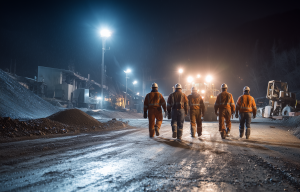 Fatigue is unusual among mining hazards in being universally acknowledged and rarely measured. Operations that would never accept an unquantified exposure to dust, noise, or ground instability routinely manage drowsiness through rosters and good intentions.
The operations that have changed that outcome did so by giving the risk a number, putting that number in front of the people who could act on it, and defining what acting on it meant.
Contact Optalert to discuss what objective drowsiness measurement would show about your operation.
References
- Austroads. Guide to Road Safety Part 5: Road Safety for Rural and Remote Areas.
- National Institute for Occupational Safety and Health (NIOSH). Training for Nurses on Shift Work and Long Work Hours, Module 7: Napping, an Important Fatigue Countermeasure. Centers for Disease Control and Prevention. cdc.gov
- Centofanti S, et al. A pilot study investigating the impact of a caffeine-nap on alertness during a simulated night shift. Chronobiol Int. 2020. PMID: 32819191.
- Ftouni S, et al. PERCLOS-based technologies for detecting drowsiness: current evidence and future directions. SLEEP Advances. 2023;4(1):zpad006. doi:10.1093/sleepadvances/zpad006
- National Heavy Vehicle Regulator. Alternative Compliance Accreditation – Fatigue (ACA-Fatigue). Available from 1 August 2026 under the amended Heavy Vehicle National Law. nhvr.gov.au