Our team at Optalert has been dedicated to innovation in sleep science for two decades now. Today, we are proud to announce that our pioneering sleep science research team has developed a unique biomarker for rapidly detecting signs of sleep issues with astonishing accuracy. The Owl Eye test is free, easy to use, takes minutes to complete, and only requires an Apple iPhone.
How do you identify sleep issues while awake?
Optalert’s breakthrough test relies on years of research in the sleep science space but is simple for anyone to do. You position yourself and the phone in a quiet, well-lit environment and count the number of diamonds that appear in a simple vigilance test. The resulting micro-movements of your eyelid – blinks, flutters, twitches – are captured using the smartphone’s front-facing camera. A complex, proprietary algorithm then analyses your eyelid signal, deriving 64 distinct parameters and identifying any neurocognitive impairment that stems from a sleep issue. You then see the result immediately.
The test is now available in Australia as an app for the Apple iPhone. The app also aims to improve your overall quality of sleep, offering links to a range of products that can help you get a better night’s rest, as well as a range of evidence-based articles on sleep health.
Superior accuracy in less time
 |
“Wearable and app-based technologies are transforming how we approach sleep, and brain health more generally. These technologies provide continuous, personalised data that helps in identifying sleep issues, and thereby promote treatments of underlying conditions that affect the brain.” – Prof. Matthew Kiernan AM, |
In terms of performance, the new technology is world-class. With an accuracy of 96.6%, Optalert’s test sets a new standard for what can be captured without in-clinic polysomnography (PSG).
Despite only taking minutes to complete, Optalert’s solution achieves greater accuracy than similar consumer-facing tests in leading smartwatches. These tests primarily rely on interpreting a user’s breathing across multiple nights using the watch’s on-board accelerometer, with some also using pulse oximetry to capture blood oxygenation levels.
However, only 17.3% of Australians own a compatible smartwatch, making them inaccessible for most. Optalert’s solution is designed for the Apple iPhone – a device owned by more than 50% of Australians. The new test represents a step change in expanding access to sleep health technologies, while delivering greater accuracy in a shorter amount of time.
A history of scientific breakthrough and research collaboration
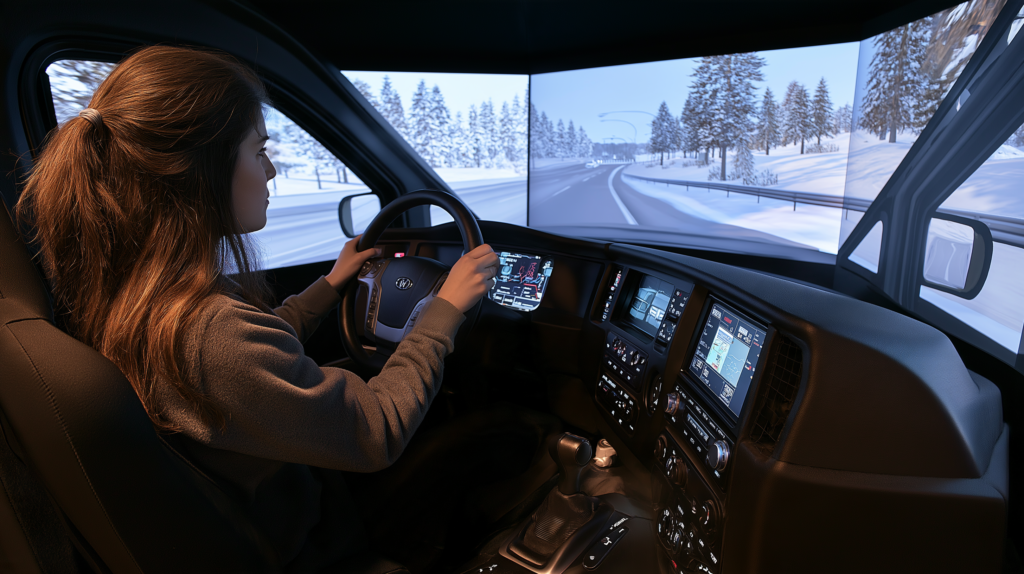
 The test leverages expertise gained in developing Optalert’s first biomarker: the Johns Drowsiness Scale (JDS). The JDS is a method of quantifying impairment due to drowsiness and is used in sleep laboratories around the world. In addition, it also has wide commercial application, currently deployed in driver monitoring systems to help protect drivers in fleets against accidents and injuries resulting from driver fatigue.
Data collection for Optalert’s new model took place in three leading sleep laboratories: Monash Medical Centre, the Monash Biomedicine Discovery Institute, and the Institute for Breathing and Sleep (IBAS).
Approximately one in five Australians are estimated to be affected by a major sleep disorder, which is estimated to cost AU$56.5 billion annually.[1] Consequently, increased awareness of sleep health is vital to the health of Australians and our economy.
Our current algorithm is part of a broader-reaching transformation making medical technologies available to consumers at low or no cost. We are also developing a biomarker that detects Alzheimer’s disease and we have active research on patients with epilepsy and traumatic brain injury. We envision a future in which smart devices passively monitor us in the background, and alert us to subtle signs of increasing impairment. Early intervention for such conditions can add many years of healthful life to millions of people.
[1] Streatfeild J, Smith J, Mansfield D, Pezzullo L, Hillman D. The social and economic cost of sleep disorders. Sleep. 2021 Nov 12;44(11):zsab132. doi: 10.1093/sleep/zsab132. PMID: 34015136.
Frequently asked questions
How does Owl Eye detect a sleep issue while someone is awake?
It measures the consequence rather than the mechanics. Disrupted sleep produces neurocognitive impairment, and that impairment is measurable in eyelid movement during waking hours. The test captures eyelid micro-movements through a phone camera during a short vigilance task and derives 64 parameters from that signal.
How long does the test take?
About ten minutes, in a single sitting. It requires a quiet, well-lit room and a phone. No overnight stay and no wearable device.
How accurate is Owl Eye?
Optalert reports an accuracy of 95.6%, against 94.2% for the Apple Watch algorithm and 88.1% for Samsung’s. Both of those require multiple nights of wear, where Owl Eye requires one test.
Does Owl Eye diagnose sleep apnoea?
No. It identifies signs of a possible sleep issue and recommends seeing a doctor. It does not establish that someone has sleep apnoea and does not grade severity. Diagnosis remains a clinical process.
What happens to the video?
It is discarded. Only the eyelid data derived from it is retained.
Where was it developed?
Data collection took place at Monash Medical Centre, the Monash Biomedicine Discovery Institute, and the Institute for Breathing and Sleep. The underlying science extends the Johns Drowsiness Scale, developed by Optalert founder Dr. Murray Johns.
A screening step that fits where people already are
The reason most sleep issues go undetected is not that they are hard to detect. It is that the pathway to detection begins with someone deciding their tiredness warrants a doctor’s appointment, which most people never pursue.
A ten-minute test that runs at a workplace health day, on a phone, changes where that pathway starts.
Contact Optalert to discuss delivering Owl Eye screening in your organisation, or partnering to deliver it.