

Some of the worst industrial and transport accidents on record share a factor that appears in the investigation reports but rarely in the headlines. The operators had not slept enough, were working through the body’s least alert hours, or had an untreated sleep disorder.
Which major disasters have been linked to drowsiness?
Official investigations have formally cited drowsiness or fatigue in a number of major transport accidents, including the Spuyten Duyvil and Oxnard rail derailments, Go! Flight 1002, and American Airlines Flight 1420. In other widely cited cases (Chernobyl among them) the attribution is popular rather than official, and the primary investigation says something different. Table 1 separates the two.
Major disasters with a documented drowsiness or fatigue factor
Table 1 summarises the twelve incidents. Where an investigating authority adopted the finding, it is named; where the link was reported or argued independently, the table says so.
| Incident | Year | Sector | The drowsiness or fatigue factor | Source of finding |
|---|---|---|---|---|
| Challenger shuttle break-up | 1986 | Space | Managers reported to have had about two hours of sleep, on duty since 1:00 a.m. | Widely reported; human error cited as a cause |
| Hinton train collision, Alberta | 1986 | Rail | Crew “demonstrated a lack of alertness”; possible “chronic fatigue” | Commission of inquiry (Foisy)10 |
| Chernobyl reactor explosion | 1986 | Nuclear | Test run at 1:23 a.m. during night-shift operation | Not an official finding. Neither IAEA report cites fatigue (see below) |
| Exxon Valdez grounding | 1989 | Marine and oil | Third Mate reported to have napped under two hours in 16 | Speculated contributing cause |
| Korean Air Flight 801 | 1997 | Aviation | Captain’s fatigue, with a poor approach and weak crew communication | NTSB probable cause: contributing5 |
| American Airlines Flight 1420 | 1999 | Aviation | “Impaired performance from fatigue”; spoiler system overlooked on landing | US National Transportation Safety Board6 |
| Canadian National / Illinois Central collision, Clarkston, Michigan | 2001 | Rail | Crew fatigue from the engineer’s untreated and the conductor’s insufficiently treated obstructive sleep apnoea | NTSB probable cause11 |
| Go! Flight 1002 | 2008 | Aviation | Both pilots fell asleep in cruise; captain had undiagnosed sleep apnoea | NTSB probable cause9 |
| Colgan Air Flight 3407 | 2009 | Aviation | Overnight commute and airport layover before duty | Discussed by the NTSB and by its chair; not in the formal probable cause |
| Air France Flight 447 | 2009 | Aviation | Captain recorded saying he had slept one hour before an 11-hour flight | Independent analysis, not the official report |
| Spuyten Duyvil derailment, New York | 2013 | Rail | Curve taken at almost three times the speed limit; diagnosed sleep apnoea | NTSB final report7 |
| Oxnard derailment, California | 2015 | Rail and road | “Acute fatigue” led a truck driver, awake about 17 hours, onto the tracks | NTSB highway accident brief8 |
Why do investigation reports say “fatigue” when the evidence points to drowsiness?
Almost every report quoted here uses the word fatigue. Almost none describes fatigue in the strict sense.
Fatigue is a reduction in the efficiency of a muscle or organ after prolonged activity, and rest relieves it. Drowsiness is a neurological state on the continuum between being awake and asleep. Rest does not relieve it. A drowsy person who sits still falls asleep.
The distinction changes the control. A fatigued crew needs a break. A crew that is drowsy at 1:23 a.m. after 13 hours on shift needs to be off the controls, because the next lapse in awareness will not be noticed by the person having it. Every incident in Table 1 involves lost sleep, night work, or a sleep disorder.
Chernobyl, Challenger, and Exxon Valdez: What happens when schedule pressure meets night work?
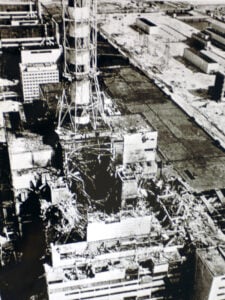
The Chernobyl reactor explosion occurred at 1:23 a.m. on 26 April 1986, killing two workers that night and 28 more within four months. The World Health Organisation and the Chernobyl Forum later projected up to 4,000 eventual deaths from radiation exposure.2
Chernobyl is the accident most often cited as a fatigue disaster. It is also the one where the evidence is weakest, and it is worth being precise about why.
The two authoritative IAEA reports (INSAG-1 in 1986 and INSAG-7 in 1992) do not attribute the accident to operator fatigue, sleep loss, or shift length.3 INSAG-1 identified human error and violations of operating rules combined with reactor features. INSAG-7 shifted the emphasis toward design, particularly the RBMK reactor’s positive void coefficient and the design of the control rods, while maintaining that the operators’ critical actions were, in its words, “most ill judged”. Neither report investigates sleep.
What remains true is narrower and still worth stating: The test was run at 1:23 a.m., in the hours of the deepest circadian trough, by a night shift. That is a risk factor, not a finding. Anyone claiming Chernobyl was caused by drowsiness is going beyond the primary investigation, and an informed reader will know it.
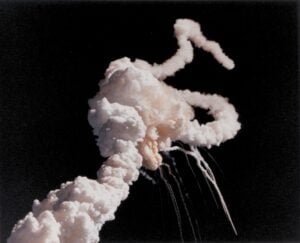
The Challenger shuttle broke apart 73 seconds after launching on 28 January 1986, killing all seven crew. Staff had worked extended hours to hold a troubled launch schedule, and some managers are reported to have had about two hours of sleep and to have been on duty since 1:00 a.m., more than ten hours before lift-off. Poor judgement and human error were reported as causes.
Shortly after midnight on 24 March 1989, the oil tanker Exxon Valdez left its designated lane to avoid ice, failed to return, and struck Bligh Reef in Alaska, releasing 10.8 million gallons of oil into Prince William Sound. Drowsiness is speculated to have contributed to the Third Mate’s failure to bring the vessel back into lane. He is alleged to have had one nap of under two hours in the preceding 16. His supervisor called that workload unremarkable: “This is just normal to me … this is what is expected of you.”
Which aviation accidents have been linked to crew drowsiness?
A truck driver who recognises the onset of drowsiness can stop at a rest area. A pilot cannot pull over.
Colgan Air Flight 3407, 2009
_wreckage-150x150.jpg) The aircraft crashed on approach to Buffalo, New York, on 12 February 2009, killing all 49 on board and one person on the ground. The NTSB’s probable cause was the captain’s inappropriate response to the stick shaker, leading to an aerodynamic stall; fatigue was not among the formal contributing factors.4 It was, however, extensively discussed. Both crew members had commuted overnight before duty, and NTSB chair Deborah Hersman observed that the “performance impacts of fatigue and alcohol were similar”. The Board issued recommendations to the FAA on crew fatigue as a result.
The aircraft crashed on approach to Buffalo, New York, on 12 February 2009, killing all 49 on board and one person on the ground. The NTSB’s probable cause was the captain’s inappropriate response to the stick shaker, leading to an aerodynamic stall; fatigue was not among the formal contributing factors.4 It was, however, extensively discussed. Both crew members had commuted overnight before duty, and NTSB chair Deborah Hersman observed that the “performance impacts of fatigue and alcohol were similar”. The Board issued recommendations to the FAA on crew fatigue as a result.
Air France Flight 447, 2009
Flight 447 was lost on 1 June 2009 en route from Rio de Janeiro to Paris, with 228 on board and no survivors. Drowsiness was not deemed a factor in the final official report, although independent analysis suggests otherwise. Recovered audio captured the captain saying: “I didn’t sleep enough last night. One hour. It’s not enough right now.”
Korean Air Flight 801, 1997
Flight 801 crashed on approach to Guam on 6 August 1997. Investigators attributed it to the captain’s poor approach, the captain’s fatigue, poor crew communication, and a lack of training at the airline. Drowsiness rarely acts alone. It degrades the crew’s capacity to catch the other three.
American Airlines Flight 1420, 1999
Flight 1420 overran the runway at Little Rock, Arkansas, on 1 June 1999, arriving late in a heavy thunderstorm. The captain and 10 passengers were killed. Distracted by the weather, the crew overlooked the automatic spoiler system, which would have stopped the overrun. NTSB documentation lists “impaired performance from fatigue” as a contributor. Drowsiness produces the step that quietly does not happen.
Go! Flight 1002, 2008
On 13 February 2008, both pilots of a 30-minute flight from Honolulu to Hilo fell asleep in cruise, and the aircraft continued a further 48 kilometres at 21,000 feet. The NTSB attributed the incident to the pilots “inadvertently falling asleep”, contributed to by the captain’s undiagnosed obstructive sleep apnoea and consecutive early-morning starts. A short sector offers no chance to accumulate fatigue. It offers ample chance to fall asleep.
What do the rail investigations show?
Rail operates around the clock, and rail investigators have been unusually willing to name sleep disorders in their findings.
Spuyten Duyvil derailment, 2013
A Metro-North passenger train derailed in the Bronx, New York, on 1 December 2013, killing four people and injuring 61 after entering a curve at almost three times the speed limit. The engineer had fallen into a daze described as “highway hypnosis”. He had been diagnosed with sleep apnoea and had struggled to adjust to an early-morning shift, and Metro-North was faulted for not screening its drivers for sleep disorders.
Hinton train collision, 1986
A Canadian National freight train and a Via Rail passenger train collided near Dalehurst, Alberta, on 8 February 1986, killing 23 people and injuring 71. Signal problems, drugs, and alcohol were ruled out. Commissioner René P. Foisy reported that the crew “demonstrated a lack of alertness” and may have been “experiencing chronic fatigue”. He also criticised a “railroader culture” that prized productivity over safety.
Canadian National / Illinois Central collision, Clarkston, Michigan, 2001
Two trains collided near Clarkston, Michigan on 15 November 2001. Both crew members of one train were killed and both of the other seriously injured. The National Transportation Safety Board determined the probable cause to be crew fatigue, primarily due to the engineer’s untreated and the conductor’s insufficiently treated obstructive sleep apnoea.11 Neither condition appeared in their medical records. The crew missed a stop signal and did not see the lights of the oncoming train.
Oxnard derailment, 2015
 At 5:44 a.m. on 24 February 2015, a Metrolink passenger train struck a pickup truck on the tracks at Oxnard, California. Here the finding was against the road user: “acute fatigue” and “unfamiliarity with the area” led the driver onto the railroad. Twenty-nine people were injured and the train engineer died a week later. The driver was suspected to have been driving almost 17 hours, a duration of wakefulness shown to impair performance equivalently to a blood alcohol concentration of 0.05%.
What does it look like when rest is treated as a control?
Captain Chelsey “Sully” Sullenberger ditched US Airways Flight 1549 into the Hudson River on 15 January 2009 after both engines failed, and all 155 on board survived. He credited rest directly: “I am convinced that had we been tired … we could not have performed at the same level.”
What these incidents have in common
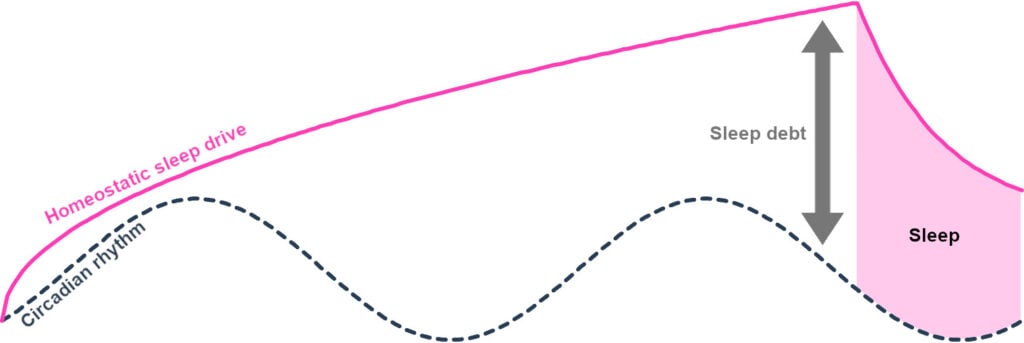 Across four sectors and three decades, the same three conditions recur: extended shifts, work scheduled through the circadian low, and untreated sleep disorders nobody was screening for. As drowsiness increases, so does the relative risk of a performance failure: a lane departure, a missed checklist item, a control input that never arrives.
Navy Captain Nick Davenport, who specialises in aviation mishaps, put the problem in one sentence: “Fatigue is under-recognised as a mishap causal factor.” Part of the reason is that it could not be measured. An investigator can establish a blood alcohol concentration to two decimal places. Drowsiness was left to rosters and inference.
That is the gap Optalert closes. The Johns Drowsiness Scale (JDS™) scores impairment from drowsiness on a 0–10 scale using eyelid movements, giving an objective, real-time number rather than a retrospective estimate.
Frequently asked questions
Was drowsiness a cause of the Chernobyl disaster?
Not according to the official investigations. The IAEA reports INSAG-1 (1986) and INSAG-7 (1992) attribute the accident to reactor design deficiencies and to operator actions that violated procedure. Neither cites fatigue, sleep loss, or shift length. The accident did occur at 1:23 a.m. during night-shift operation, which is a recognised risk factor, but that is not the same as a causal finding.
Did drowsiness cause the Exxon Valdez oil spill?
Drowsiness is speculated to have contributed to the Third Mate’s failure to return the vessel to its lane before it struck Bligh Reef on 24 March 1989. He is alleged to have napped under two hours in the preceding 16.
Which aviation accidents has the NTSB linked to crew fatigue?
NTSB documentation lists “impaired performance from fatigue” as a contributor to American Airlines Flight 1420 in 1999, and attributes the 2008 Go! Flight 1002 incident to both pilots falling asleep. The NTSB chair also identified fatigue in the Colgan Air Flight 3407 investigation.
How often is sleep apnoea involved in transport accidents?
It appears in three incidents here: the Go! Flight 1002 captain, the Spuyten Duyvil engineer, and both conductors in the 2001 Canadian National collision, whose diagnoses were neither recorded nor treated.
Is drowsiness comparable to alcohol impairment?
The NTSB chair investigating Colgan Air Flight 3407 stated that the performance impacts of fatigue and alcohol were similar. In the Oxnard case, the driver had been awake about 17 hours. Research published in Nature in 1997 found that 17 hours of sustained wakefulness impairs cognitive performance to a degree equivalent to a blood alcohol concentration of 0.05%, rising to 0.10% at 24 hours awake.1
Why do investigation reports use “fatigue” rather than “drowsiness”?
“Fatigue” is an umbrella term across safety literature. Strictly, fatigue is a loss of muscle or organ efficiency that rest relieves, while drowsiness is the neurological state preceding sleep, which rest does not. Nearly every case here describes drowsiness.
References
- Dawson D, Reid K. Fatigue, alcohol and performance impairment. Nature. 1997;388:235. doi:10.1038/40775
- The Chernobyl Forum (IAEA, WHO, UNDP and others). Chernobyl’s Legacy: Health, Environmental and Socio-Economic Impacts. 2005. WHO summary
- International Nuclear Safety Advisory Group. INSAG-7: The Chernobyl Accident, Updating of INSAG-1. IAEA Safety Series No. 75-INSAG-7, 1992. Full report (PDF)
- National Transportation Safety Board. Loss of Control on Approach, Colgan Air Inc., Bombardier DHC-8-400, Clarence Center, New York, February 12, 2009. Aircraft Accident Report NTSB/AAR-10/01.
- National Transportation Safety Board. Controlled Flight Into Terrain, Korean Air Flight 801, Boeing 747-300, Nimitz Hill, Guam, August 6, 1997. NTSB/AAR-00/01. The captain’s fatigue is a stated contributing factor.
- National Transportation Safety Board. Runway Overrun During Landing, American Airlines Flight 1420, MD-82, Little Rock, Arkansas, June 1, 1999. NTSB/AAR-01/02.
- National Transportation Safety Board. Metro-North Railroad Derailment, Spuyten Duyvil, New York, December 1, 2013. Railroad Accident Brief NTSB/RAB-14/12.
- National Transportation Safety Board. Train and Truck Collision, Oxnard, California, February 24, 2015. Highway Accident Brief NTSB/HAB-16/07.
- National Transportation Safety Board. Incident SEA08IA080: Mesa Airlines operating as go! Flight 1002, Bombardier CL-600-2B19, Hilo, Hawaii, February 13, 2008. Probable cause: the captain and first officer inadvertently falling asleep during cruise. Contributing: the captain’s undiagnosed obstructive sleep apnoea and recent work schedules with consecutive early-morning starts. Prompted NTSB Safety Recommendations A-09-61 to -66.
- Foisy RP. Report of the Commission of Inquiry into the Hinton Train Collision. Canada, 1986.
- National Transportation Safety Board. Collision of Two Canadian National/Illinois Central Railway Trains, Clarkston, Michigan, November 15, 2001. Railroad Accident Report NTSB/RAR-02/04. Probable cause: crew fatigue, primarily due to the engineer’s untreated and the conductor’s insufficiently treated obstructive sleep apnoea.
Every one of these findings was made after the event
Each conclusion here was reached by an investigator working backwards from wreckage. The rosters and the medical records all existed before the accident as well. What was missing was a way to see the operator’s state at the time it mattered.
Contact Optalert to discuss how objective, real-time drowsiness measurement can identify elevated impairment in your operation while there is still time to intervene.