
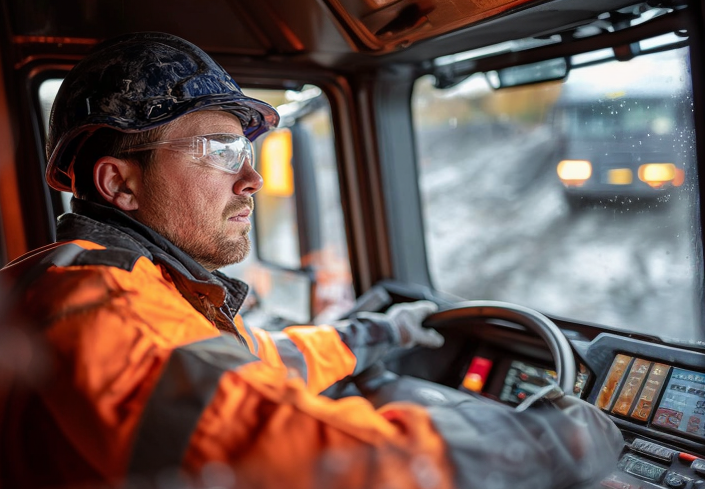
Human perception is a poor indicator of drowsiness. In industries where worker safety is paramount, relying on self-assessment alone can introduce serious operational risks.
Key summary:
In this article, we discuss why humans are fundamentally poor at assessing their own drowsiness, particularly in safety-critical environments like mining and transport. It explores:
- Why subjective awareness of drowsiness is unreliable
- How drowsiness affects the brain and impacts one’s ability to self-monitor drowsiness
- The operational factors in the mining and transport industries that make accurate self-assessment even more difficult
Most importantly, it explains why objective drowsiness monitoring is increasingly essential for managing risk and improving safety outcomes.
In the mining industry, it is common to use the terms ‘fatigue’ and ‘drowsiness’ interchangeably. In this insights piece, we stick to the term commonly used in the scientific literature: ‘drowsiness’.
Many workers assume they can accurately judge when drowsiness has reached an unsafe level. And while recognising drowsiness is important, subjective awareness does not always reflect the true level of impairment.
When considering a job that includes long shifts, night work, and demanding tasks, human perception can be an unreliable indicator of drowsiness risk.
The Illusion of Self-Awareness
In operational environments, workers tend to adapt to rising drowsiness. Rather than treating it as an indicator to rest, it is instead perceived as part and parcel of the job.
As a result, workers can tell themselves they are still functionally well enough to complete tasks, despite having reduced alertness and reaction time. This creates a dangerous mismatch between perceived alertness and actual performance – increasing the likelihood of errors and accidents.
Additionally, self-monitoring becomes even less reliable during nighttime, when the body’s circadian rhythm naturally promotes sleep, making it even more difficult to identify drowsiness in night-shift workers.
Drowsiness Impairs the Brain’s Ability to Self-Assess
One of the biggest challenges with drowsiness is that it affects the very systems we rely on to judge our own condition.
Drowsiness has profound effects on the body, leading to reduced productivity, slower movements, increased irritability, lack of attention to detail, and more. As alertness decreases, our ability to accurately evaluate our own performance also declines.
Simply put, the drowsier we are, the harder it is for us to recognise it.
In high-risk environments such as mining and transport, this can lead workers to continue operating equipment or vehicles while believing they are still capable of performing safely, despite declines in alertness and cognitive performance.

Operational Factors Make Self-Assessment Difficult
Mining and transport environments introduce additional challenges that make drowsiness even harder to recognise:
Perverse incentives
Many employees in safety-critical sectors are given fitness-for-duty tests prior to each shift. These often involve subjective assessment via questionnaires such as the Epworth Sleepiness Scale (ESS) or Karolinska Sleepiness Scale (KSS). The employee knows they will not be permitted to work if they report any drowsiness, so they do not respond accurately.
Long and irregular shifts
Extended work hours and rotating rosters can disrupt the body’s natural sleep-wake cycle. Workers may accumulate sleep debt over several days without immediately noticing the effect on their performance.
Night work
Humans are biologically conditioned to sleep at night. Working overnight or in the early morning hours means operating during a natural dip in alertness, even if the individual does not subjectively feel exhausted.
Monotonous environments
Repetitive or low-stimulation tasks can accelerate the onset of drowsiness. Workers may remain unaware of declining alertness until significant lapses in attention occur.
Cultural expectations
In general, pushing through tiredness is sometimes seen as part of the job. Workers may underestimate drowsiness or avoid reporting it because they feel pressure to appear resilient and continue working.
When combined, these factors can make drowsiness both common and difficult to recognise.
Why Objective Drowsiness Monitoring Matters
Because self-assessment is unreliable, many safety experts now recognise the need for objective measures of drowsiness.
Objective monitoring technologies provide real-time insights into alertness levels, allowing businesses to identify drowsiness risk before it leads to an accident. Instead of relying solely on subjective reports, operators and safety teams can assess data that reflects a worker’s actual level of alertness via physiological biomarkers.
With this approach, organisations transition from reactive responses to proactive drowsiness management.
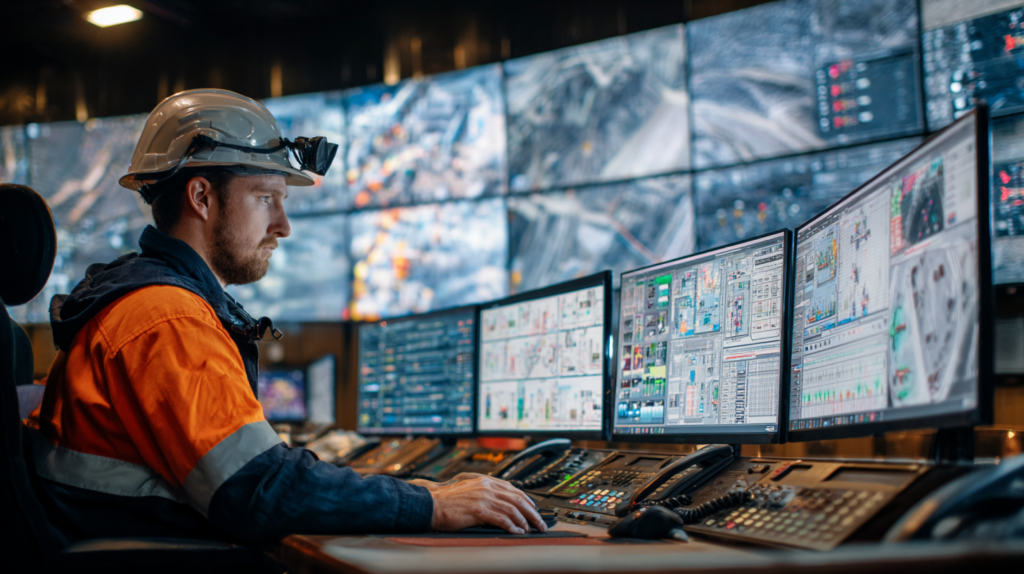
Building Safer Operations Through Better Drowsiness Management
Drowsiness cannot be fully eliminated in industries that rely on shift work and extended operations. Despite this, drowsiness can still be better managed when organisations use technology to objectively detect it with greater accuracy than an individual’s self-awareness.
By combining drowsiness education, operational policies, and objective monitoring technologies, organisations can create safer environments for their workers and their operations.
Reduce Risk with Driver Drowsiness Monitoring Solutions
Optalert works with mining, transport, and automotive organisations to help them better understand and manage drowsiness risk.
Through driver drowsiness monitoring and our Eagle system, organisations can reduce risk and gain objective insight into drowsiness, enabling them to take proactive action before incidents occur.
To learn more about how Optalert supports drowsiness risk management in mining and transport, explore our solutions or speak with our team.
Want to know more?
Get in touch using the form below. Just enter your name, email address, and your message, and we’ll get back to you as soon as possible.